Brand, Age, Type, and Location: What 30,000 Sales Teach Us About Preowned RV Valuation
By Nick Farnell
Sales managers know the high-stakes game of preowned appraisals. Quote too high on a trade-in to win a deal, and that unit sits on your lot for far too long eating floorplan interest before taking an aggressive price cut. Quote too low, and your customer turns to a competitor who offered $2,000 more for their trade.
For a very long time, appraisals have relied on a combination of quick internet searches and gut instinct. While market experience is incredibly valuable, recent swings in Canadian inventory levels, threats of trade tariffs, and shifting consumer demand have exposed the limits of gut instinct.
To understand what actually drives preowned transaction values on Canadian lots, we analyzed over 30,000 national preowned transaction records using multi-variable regression modeling. By stripping away emotion and isolating variables like vehicle age, category, location, brand, and transaction dates, the data reveals clear patterns that can sharpen your appraisal strategy.
The Predictability Index: High-Confidence vs. High-Risk Trades
In statistical terms, pricing models calculate how much of an item’s selling price is explained by its known specifications and characteristics. On the appraisal desk, think of this as a Predictability Index: How much can you rely strictly on listing factors like age, brand, and vehicle type when pricing a unit?
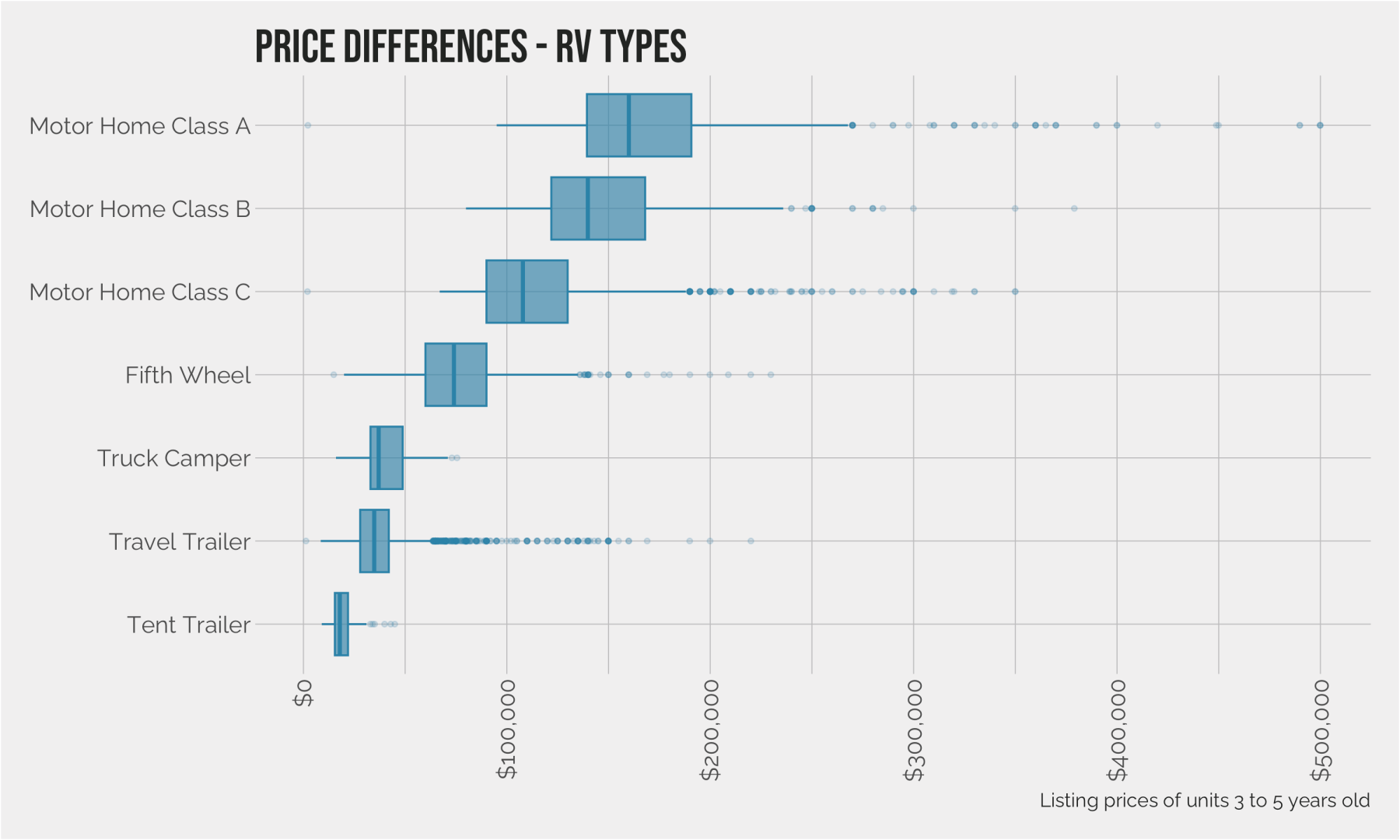
RV type is by far the single most important factor and establishes the baseline price scale across the market. Age, brand, and location are also strong price predictors, but their influence varies significantly depending on the category.
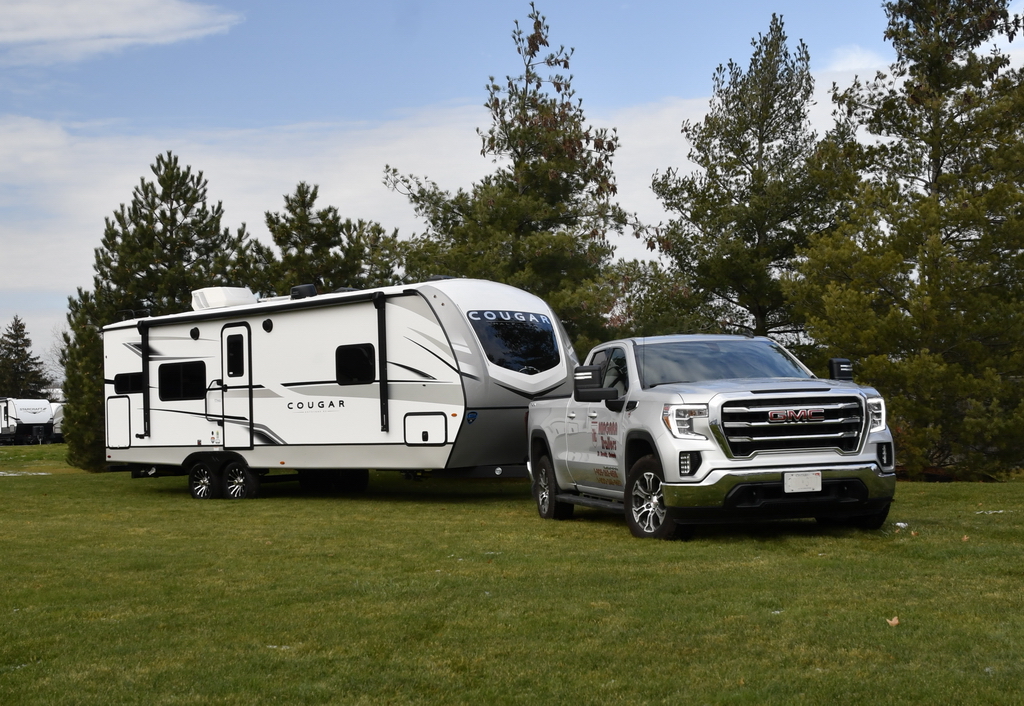
- Towables (Fifth Wheels & Travel Trailers): These units carry a high level of predictability. Standardized options, clear floorplan tiers, and defined brand positioning make preowned pricing straightforward and low-risk.
- Tent Trailers: These are a little harder to predict using data alone. Actual values are influenced by physical attributes like canvas color, seam integrity, and zipper condition.
- Motorized Rigs: Motorhomes are a mixed bag. Brand and age are critical, but odometer readings and unseen mechanical wear introduce higher variance.
The 3-Year Depreciation Cliff
Depreciation does not move in a straight line. When mapping vehicle age against market transaction prices, preowned units follow a distinct curve:
- Years 1–3 (The Cliff): Units experience rapid, steep value drops annually during their first 36 months on the road.
- Years 4+ (The Plateau): After year three, depreciation flattens into a far more stable, gradual curve.
Depreciation velocity also varies by vehicle category. Age hits Fifth Wheels and Class B Motorhomes harder during early ownership, whereas Travel Trailers and Tent Trailers experience a more gradual depreciation curve over time.
Paying near-new money for a 2-year-old trade-in is problematic because the unit is still actively sliding down the depreciation cliff. Conversely, 4 to 7 year-old preowned units might represent a sweet spot for dealership gross margin since their depreciation rate has stabilized, but their physical condition still commands strong retail financing options.
Regional Price Baselines: Provincial Gaps
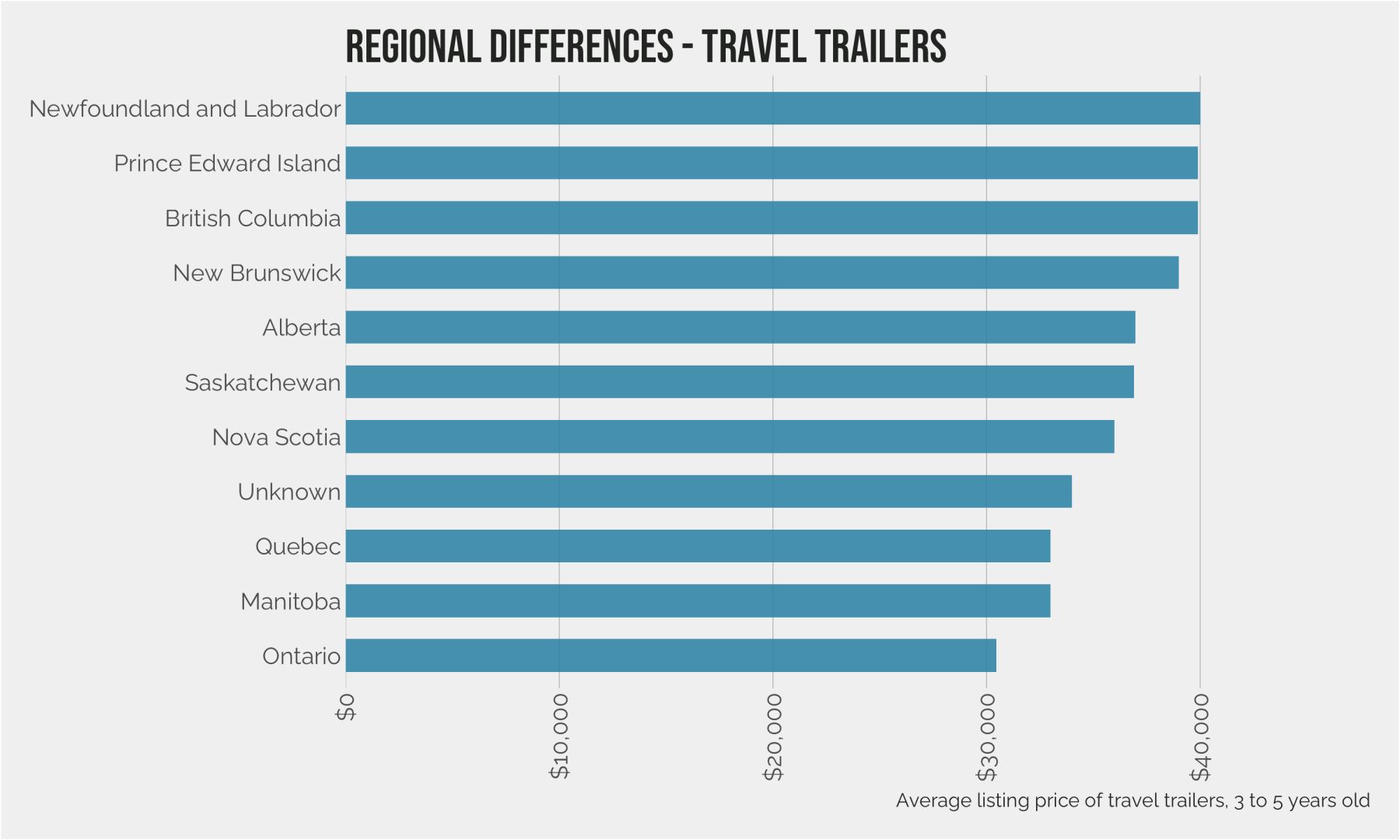
When controlling for vehicle age, class, and transaction dates, geography creates a substantial pricing spread across Canadian provinces.
- Eastern Canada: Atlantic provinces tend to sit on the higher side of preowned baseline prices. Factors include lower population density, less regional dealer competition, limited inventory supply, and higher transit/freight costs.
- Western Canada: Alberta and British Columbia see higher overall consumer demand. In coastal B.C. regions, an extended mild outdoor season keeps buyers active longer, supporting strong preowned baselines.
- Ontario: Ontario often sees lower listing prices for similar units. High population density, saturated dealer networks, and heavy inventory competition force more aggressive pricing on preowned lots.
Brand Equity: Towables vs. Motorized
The Corporate Parent Trap
Data across preowned Canadian sales suggests that parent manufacturer names have little direct impact on preowned prices. Virtually every parent manufacturer produces entry-level, mid-tier, and luxury brands under one corporate umbrella, making the parent name too broad to provide a pricing signal.
When you drill into the data, brands behave completely differently in towables versus motorized inventory:
Towables: The “Sister Twin” Effect
In Travel Trailers and Fifth Wheels, manufacturers frequently build nearly identical units under different brand names. In these cases, the framing, appliances, and floorplans are similar, and their preowned values track closely together. Brand matters, as well as floorplan popularity and overall physical condition.
Motor Homes: Brand is King
In Class A Motor Homes, divisional brand acts as a direct proxy for critical high-value attributes. Specific brand badges signal quality, engineering, luxury, and reputation. While odometer readings and physical condition are important, brand is very powerful across motorized inventory.
Busting the Seasonality Myth: Price vs. Turn Velocity
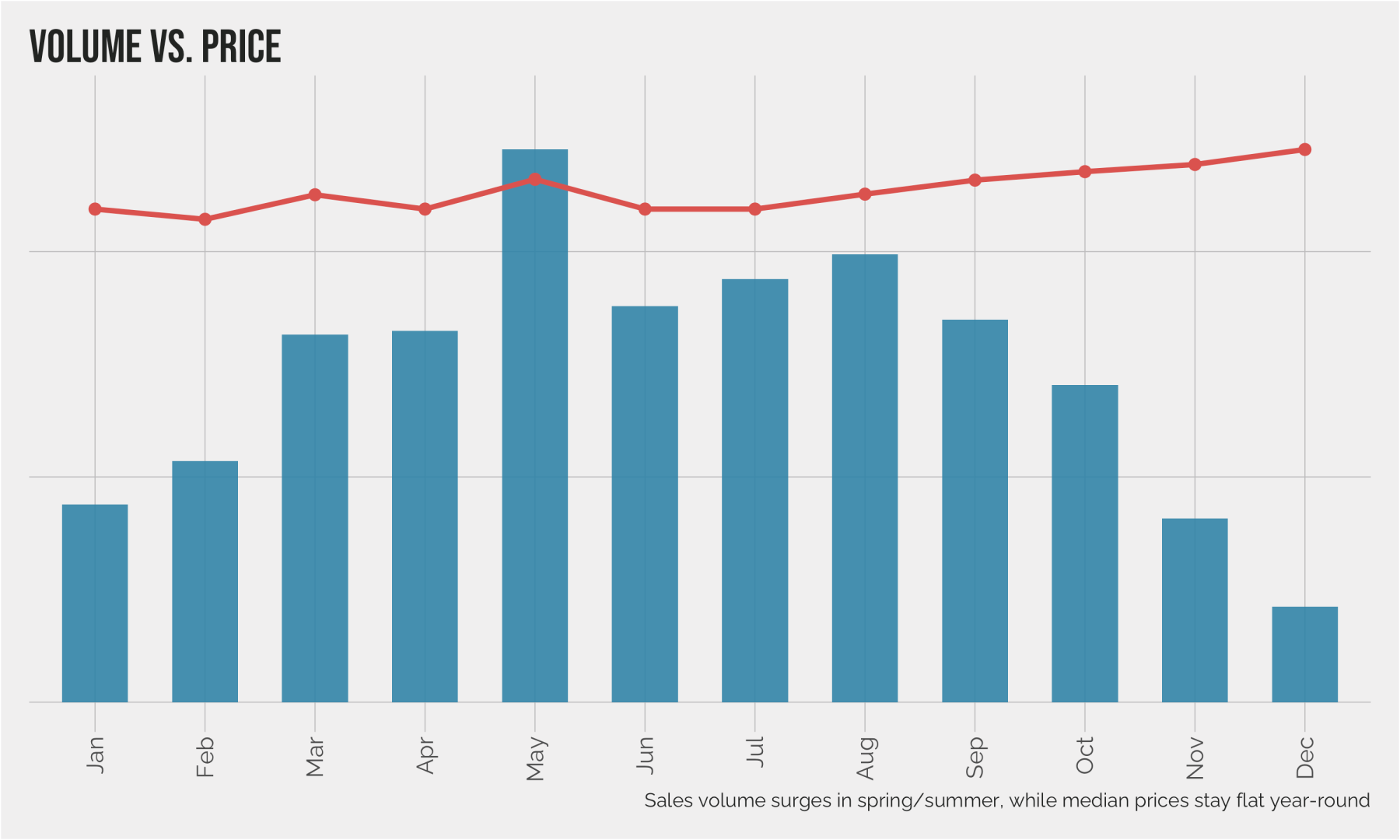
Time of year does not impact final transaction prices as much as you might think.
Canadian buyers shopping in October or November do not receive thousands of dollars in baseline transactional discounts simply because of the calendar month. Instead, seasonality impacts inventory velocity (days on lot).
Spring sales move quickly—buyers want to get outdoors immediately, which reduces dealership floorplan holding costs. Fall sales will likely take longer to happen, but prices remain firmly tied to age, class, and condition. Discounting preowned stock aggressively in the fall might not be the best strategy.
Putting the Data to Work
By replacing gut feel with data-driven appraisal rules, dealerships can minimize floorplan holding risks, protect margins, and trade with confidence.
For interactive dashboards and weekly updated preowned sales data by province, RV type, manufacturer, and model year, please visit www.wtrfll.ca.

Nick Farnell is a professor of business analytics and runs the consulting firm wtrfll, focusing primarily on competitive intelligence and data driven insights. When not in front of a computer, he is spending as much time as possible in one of Ontario’s provincial parks with his young family.
Please visit https://wtrfll.ca/ to see how Nick and his team have helped organizations use data and analytics to better understand their customers and competitors.