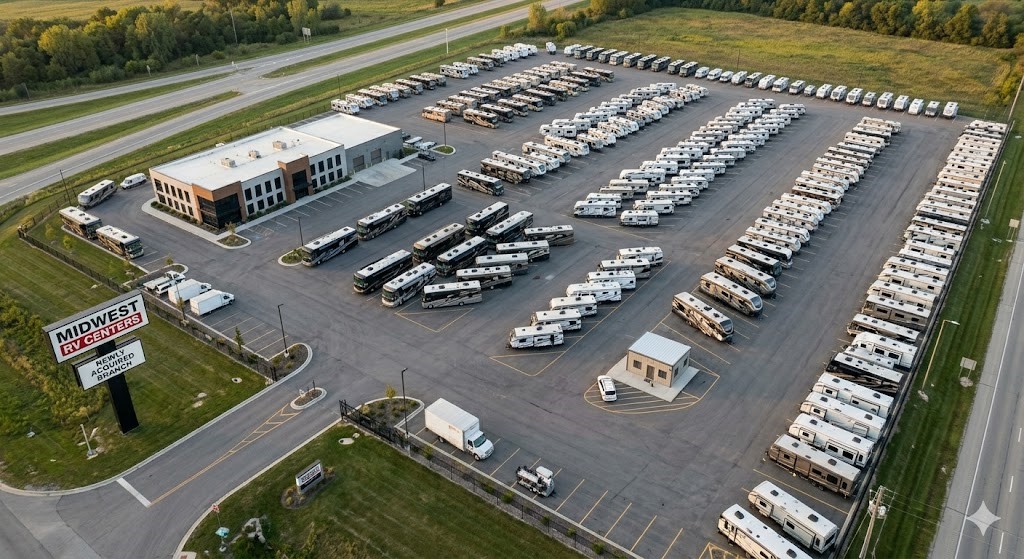
What RV dealership owners need to know before putting their business on the market — from the first handshake to the closing date.

By Josh Rosen, Lawyer and Toronto Office Lead, Pulse Law
The RV industry in Canada has been buzzing lately, and not just at the campground. Behind the scenes, dealerships across the country are fielding calls from buyers they have never heard of: private equity firms, large dealer groups, and strategic acquirers looking to expand their footprint. For many owners who have spent decades building a family business, the sudden attention can be flattering, exciting, and more than a little overwhelming.
The question is: how do you navigate a process that most people only go through once in their lives?
This article offers practical guidance for dealership owners who are considering a sale or who have already been approached. Mergers and acquisitions, or M&A, has its own language, its own customs, and its own traps for the uninitiated.
The RV dealer space also has structural features that make transactions more complex than a standard business sale. Understanding both before you sit down at the table can make the difference between a deal that reflects the true value of your business and one that does not.
First Contact: Handling an Approach the Right Way
It often starts casually. Someone calls your general manager, emails through your website, or strikes up a conversation at a trade show. They express admiration for your operation and mention – almost as an aside – that their firm has been “looking at opportunities” in the market. This is the opening move of what could become a formal acquisition process, and how you respond matters.
The most important thing you can do at this stage is resist the urge to share information too freely. A buyer who approaches you without a signed non-disclosure agreement (an “NDA”) should not be receiving your financial statements, inventory data, or customer lists. An NDA is a legally binding contract that prevents the other party from using or disclosing your confidential information outside of the deal process. Insisting on one before any substantive discussion is not rude. It is standard deal practice, and any sophisticated buyer will expect it.
This is also the moment to engage proper legal counsel if you have not already done so. General business lawyers do excellent work on the day-to-day needs of a dealership, but M&A is a specialized field with its own documentation, negotiating dynamics, and risk profile. Look for a lawyer who has closed transactions of comparable size and complexity. The cost of experienced counsel is modest relative to what is at stake.
Understanding What You Are Actually Selling
Before a number gets put on paper, buyers will want to understand your business in detail. This phase is called due diligence, and it is more thorough than most sellers anticipate. A buyer will examine your financial statements — typically three to five years of them, ideally prepared or reviewed by an accountant. They will look at your inventory, your real property leases, your manufacturer and dealer agreements, your employment contracts, your outstanding liabilities, and anything else that touches the operation. Sophisticated buyers can quickly develop an understanding of the business that matches or even exceeds yours.
One concept that will come up immediately is EBITDA — earnings before interest, taxes, depreciation, and amortization. This is the standard measure of operating profitability used in most M&A transactions. Buyers typically value businesses as a multiple of EBITDA depending on the size and quality of the business, current market conditions, and the level of buyer interest. Understanding your own EBITDA, and being able to explain any unusual swings in it, will be important throughout the process.
Because the RV business is highly seasonal, how you present your financials matters. A buyer looking at trailing twelve-month numbers anchored to the off-season will see a very different picture than one reviewing peak-season results. Work with your accountant to normalize revenue and earnings across a full seasonal cycle so that the numbers reflect the true earnings power of the business rather than a snapshot that flatters or unfairly penalizes you depending on timing.
You should also understand the distinction between an asset sale and a share sale.
In a share sale, the buyer acquires the shares of your corporation and, with them, everything the company owns – including its liabilities.
In an asset sale, on the other hand, the buyer selects which specific assets and liabilities they are taking on.
From a seller’s perspective, a share sale often results in more favourable tax treatment in Canada, including the potential to access the lifetime capital gains exemption on qualifying small business shares.
Buyers frequently prefer asset deals for risk management reasons, which means this point is nearly always negotiated. Your lawyer and accountant will help you model the implications. This single structural decision can have a material impact on your net proceeds.
The Manufacturer Relationship: Your Most Important Asset and Your Biggest Variable
For RV dealerships, there is a layer of complexity that does not exist in most business sales: the manufacturer dealer agreement. Whether you carry one major brand exclusively or a combination of brands, your right to sell those products almost certainly flows from a dealer agreement that is not automatically transferable to a new owner. These agreements commonly contain change-of-control provisions requiring manufacturer consent before the business can be sold or assigned.
This means a buyer is potentially acquiring a business whose core commercial relationships could evaporate or be significantly renegotiated if a manufacturer withholds consent or uses the transaction as leverage. Manufacturers are not obligated to approve a new owner, and they may see a pending sale as an opportunity to revisit territory rights, sales targets, or facility requirements.
The practical implication for sellers is this: your dealer agreements need to be reviewed carefully before you go to market, and manufacturer relationships need to be managed thoughtfully throughout the process. Sophisticated buyers will flag this issue early and may make closing conditional on receiving satisfactory confirmation from key manufacturers. The strength and tenure of your manufacturer relationships is a genuine business asset that is worth articulating clearly to prospective buyers.
It is also worth noting that the upstream manufacturer landscape has itself been consolidating for years. Fewer, larger manufacturers means more concentrated relationships and, in some cases, more negotiating leverage on the OEM side. Buyers will factor the durability of your manufacturer relationships into their valuation.
Floorplan Financing: Understanding How It Flows Through a Deal
Nearly every RV dealership carries inventory on a floorplan credit facility – a revolving line of credit secured against vehicle stock, typically provided by a chartered bank or a manufacturer-approved lender. These credit facilities can be substantial, potentially with millions of dollars outstanding depending on the size of the operation.
In a transaction, the treatment of floorplan debt is a significant structural question that affects both how the deal is priced and what the seller actually walks away with. Is the buyer assuming the existing floorplan facility? Paying it off at closing from the purchase price? Replacing it with their own financing arrangement? Each approach has different implications for the mechanics of closing and for the net proceeds the seller receives.
Related to this is the question of inventory valuation. Unlike many businesses where inventory is predictable and stable, RV inventory is seasonal and variable in quality. Buyers will want to age the inventory and apply discounts to older or slower-moving stock. How inventory is valued at the time of closing, and whether there is a mechanism to adjust the purchase price based on actual inventory condition, is frequently a point of negotiation. Sellers should have their own clear, defensible view of what their inventory is worth before they enter that conversation.
The Letter of Intent: More Important Than It Looks
Once a buyer is serious, they will typically present a letter of intent, or an “LOI”, or a detailed term sheet. This document sets out the key proposed terms of the deal: the purchase price, the structure, the conditions that need to be satisfied before closing, and the timeline. It also usually contains an exclusivity clause that prevents you from speaking with other potential buyers for a set period while the parties work toward a definitive agreement.
Many sellers treat an LOI as a mere starting point or a formality before the real negotiation begins. That is a mistake. The terms set in an LOI tend to persist, because once a number is on paper it becomes psychologically anchored.
Negotiate the LOI seriously, with your lawyer at your side.
Key points to scrutinize include the purchase price and how it is calculated, whether any portion is deferred or contingent on future performance (known as an earnout), how inventory and working capital are being treated, the length of the exclusivity period, and what conditions the buyer must satisfy before they are obligated to close. On the last point, pay particular attention to any condition that gives the buyer broad discretion to walk away – sometimes tied to a “material adverse change” clause – and push to define those terms as specifically as possible, as early as possible.
Representations, Warranties, and the Importance of Disclosure
The definitive purchase agreement is the main contract governing the transaction. This document will contain a lengthy set of representations and warranties. These are snapshot statements of fact that you, as the seller, are making about the business: that the financial statements are accurate, that there is no material litigation pending, that all necessary licences are in good standing, that your dealer agreements are valid and in good standing, and so on.
If a representation turns out to be false or incomplete, the buyer may have a claim against you after closing. This is why the disclosure process matters enormously. Your job, working closely with your lawyer, is to ensure that anything that might qualify or contradict one of these statements is properly disclosed in writing before the deal closes. A well-constructed disclosure schedule protects you; incomplete disclosure can be costly in the aftermath of a deal.
Buyers will typically seek an indemnification clause that allows them to pursue claims against you for a period after closing if undisclosed problems emerge. The scope, cap, and time limits on that indemnity are among the most heavily negotiated provisions in any deal.
Real Estate: Sell It, Keep It, or Lease It Back?
RV dealerships require significant physical footprint with large lots, service bays and storage facilities. For many family-owned operations, the real property is owned outright and may have appreciated considerably over the years. How you handle the real estate in a transaction is one of the more consequential decisions you will make.
The three common approaches are:
- selling the real estate as part of the overall transaction;
- retaining ownership and leasing the property back to the buyer under a long-term lease; or
- some combination of the two.
Sale-leaseback arrangements are common in dealer roll-ups and can be attractive because they allow the seller to monetize the property while preserving a stable income stream. However, they also lock you into a long-term lease obligation that a buyer will likely insist is at market rates and extends for a term that makes their investment viable. If you retain a minority equity stake in the business post-sale, that lease will directly affect the economics of the ongoing operation.
The real estate decision has its own tax and legal dimensions separate from the business sale, and it deserves dedicated attention from your advisory team.
Preparing Your Business Before You Go to Market
If a sale is on your horizon — even a few years out — there are practical steps you can take now to maximize value and reduce friction later. Clean, consistent financial statements prepared by a reputable accountant are among the most valuable things you can have. Buyers discount businesses with messy or incomplete books, even when the underlying performance is strong.
Ensure that your key contracts are in order and that you understand which ones require third-party consent to transfer, including, critically, your manufacturer dealer agreements and your real property leases. Discovering mid-transaction that a landlord or manufacturer has leverage over the deal can cause delays and give a buyer ammunition to renegotiate terms.
Think carefully about key person risk and the degree to which the business depends on you personally. A buyer acquiring a dealership where the owner is the primary relationship holder with key manufacturers, the head of the service department, and the lead finance manager will price that concentration of risk into their offer. The more the business demonstrates that it runs well without you at the centre of everything, the more attractive and valuable it becomes.
Finally, if yours is a family-owned business with multiple shareholders or family members involved in the operation, have the ownership conversation internally before the first NDA is signed. Are all shareholders aligned on a sale? Are there family members who want to continue working under new ownership? Are there differing expectations about price or timing? These dynamics can derail a deal at any stage if they surface unexpectedly during negotiations. Getting internal alignment early is not just good family practice; it is a prerequisite for a smooth process.
A Note on Deal Structure for Partial Sales
Not every buyer wants to acquire 100% of a business. Private equity firms in particular often prefer to acquire a controlling interest while leaving the owner with a meaningful minority stake. The idea is that the seller receives a substantial cash payment at closing, continues to run the business with institutional support, and participates in a second payout when the platform is eventually sold or recapitalized. In an industry experiencing active consolidation, this model is being used by acquirers looking to build multi-location dealer groups quickly.
If you are approached with a structure like this, understand clearly what you are retaining, what governance rights attach to your minority position, and what the exit mechanism looks like. A minority interest in a private company without defined exit rights can be difficult to monetize on your own timeline.
A Final Word
Selling a business you have spent years or decades building is one of the most significant financial events of your life, and the RV industry’s current consolidation cycle means that many dealership owners may face this decision sooner than they expected.
The buyers approaching you have done this many times before. Levelling the playing field starts with understanding the process, assembling the right advisors, and taking the time to negotiate terms that you are confident reflect what your business is genuinely worth.
A good deal is not simply the highest number – it is the right structure, the right protections, and terms that hold up from the LOI all the way through to closing day.

Josh Rosen is a Lawyer and the Toronto Office Lead at Pulse Law, practising M&A, corporate finance, and securities law.
This article is intended for general informational purposes and does not constitute legal advice. Readers should consult qualified legal counsel regarding their specific circumstances.